Aluminum Planter Boxes for Villa Gardens: A Complete Landscape Designer's Guide
A planter box is not just a container for plants. In villa and hotel landscape design, planters define boundaries, frame views, soften architecture, and create rhythm across outdoor spaces. But the material you choose determines whether those planters still look pristine five years later — or whether they're cracking, rusting, and staining the paving beneath them.
The answer, increasingly, is aluminum. Not just any aluminum — 6063-T5 architectural-grade virgin aluminum, finished with a coating system engineered for decades of outdoor exposure. In this guide, we'll walk through everything a landscape designer, architect, or property developer needs to know before specifying aluminum planters for a project.
The Short Answer: Why Aluminum Is the Material Choice for Premium Planters
Three facts, no fluff:
- Aluminum does not rust, crack, or rot. Unlike wood (rots, attracts insects), concrete (cracks, stains, immovable), and plastic/fiberglass (fades, feels cheap), aluminum stays structurally intact and visually clean for decades.
- Aluminum is lightweight enough to reposition — even after planting. A large concrete planter is effectively permanent once placed. An aluminum planter of the same volume can be moved by two people.
- Aluminum matches modern architecture. Clean lines, precise corners, consistent color — aluminum planters complement contemporary villa aesthetics without competing for attention.
The trade-off? Aluminum costs more upfront than plastic or basic wood. But across a 10-year horizon, the math flips: zero replacement cost, zero refinishing, zero staining cleanup.
| Material | Rust? | Crack? | Moveable? | 10-Year Aesthetic | Best For |
|---|---|---|---|---|---|
| Aluminum | Never | Never | Yes | Looks like new | Hotels, villas, luxury landscape |
| Wood | Rot + insects | Warps, splits | Depends | Requires refinishing | Rustic/cottage gardens |
| Concrete | No | Often cracks | No | Stains over time | Permanent installations |
| Plastic/Fiberglass | No | Rarely | Yes | Fades, looks cheap | Budget temporary use |
Aluminum Planter Box vs. Wood, Concrete, and Plastic — A Deeper Look
Aluminum vs. Wood Planters
Wood planters have a timeless, natural look — that's their strength. But that look comes with a maintenance clock.
Wood in constant contact with wet soil begins to decompose. Even treated hardwoods like teak or ipe require annual oiling or sealing. Skip a year, and the surface grays, then splinters. Insects — termites in warm climates, carpenter ants in temperate zones — accelerate the process.
Aluminum has zero organic matter for insects to consume and zero permeability for water to penetrate. The appearance stays consistent year after year with nothing more than occasional cleaning.
For a hotel or villa where a tired-looking planter immediately signals neglect, aluminum eliminates that risk entirely.
Aluminum vs. Concrete Planters
Concrete planters convey permanence and mass. They look substantial. They also weigh hundreds of kilograms and are functionally permanent — once placed, they stay. Relocating a 300 kg concrete planter means hiring a crane or breaking it apart.
Concrete also develops efflorescence — white mineral staining that leaches from the material onto the surface and onto surrounding paving. In regions with freeze-thaw cycles, trapped moisture expands and cracks the concrete from within.
Aluminum planters offer the same clean, modern silhouette as concrete — but at a fraction of the weight, with zero risk of cracking or staining.
Aluminum vs. Plastic and Fiberglass Planters
Plastic and fiberglass are the budget options. They are lightweight and inexpensive — and they look like it.
Under UV exposure, plastic fades unevenly and becomes brittle. Fiberglass can delaminate at the gelcoat layer after years of sun and rain. Neither material carries the visual weight or perceived quality that a hotel or high-end villa expects.
Aluminum weathers UV without visible change — the color is locked into the coating, not onto the surface.
Planter Box Types and Configurations
Rectangular Planter Box
The workhorse of landscape design. Rectangular planters define edges — along pathways, at property boundaries, framing terraces and pool decks. Standard proportions range from narrow (30-40 cm width for low hedging) to wide (60-100 cm for small trees and shrubs). Length is fully customizable.
Square Planter
Square planters read as standalone focal points. Place one at an entryway, on either side of a gate, or as the centerpiece of a courtyard. A 80 cm × 80 cm square planter with a sculptural tree or topiary makes a stronger visual statement than a rectangular one of the same volume.
Tall Planter Box
Tall planters — 80 cm to 120 cm in height — serve double duty as greenery containers and privacy screens. A row of tall aluminum planters with dense shrubs can replace a fence or wall, creating a green boundary that feels softer than hardscape but still defines space.
The taller the planter, the more important the material choice becomes: a tall concrete planter exerts tremendous ground pressure and is nearly impossible to relocate. An aluminum one of the same height remains manageable.
Modular Planter Systems
For large commercial landscapes — hotel grounds, resort gardens, corporate campuses — modular aluminum planters can be configured and reconfigured as the design evolves. Standardized modules in matching finishes create visual cohesion across an entire site.
This is a key advantage aluminum holds over concrete: aluminum modules can be disconnected, moved, and reassembled. Concrete modules are set for life.
Planter + Bench Combo
An increasingly popular design: an aluminum planter with an integrated bench seat on one side. The planter provides greenery and spatial definition; the bench provides seating. Together they turn a planting bed into a destination. For hotel pool decks and villa terraces, this dual-purpose design maximizes space.
Planter + Screen Panel Combo
Another integration opportunity: an aluminum planter base with a matching screen panel rising from the rear. The planter anchors the screen, the screen provides privacy, and the plants soften the metal. Because both elements come from the same manufacturer in the same finish, the result reads as one intentional design piece, not two products bolted together.
Size and Proportion — Getting the Scale Right
The One-Third Rule
A useful guideline: the length of a planter should be roughly one-third the length of the wall, fence, or boundary it sits against. A 9-meter terrace wall looks balanced with a 3-meter planter. A 6-meter facade suits a 2-meter planter.
This is not a rigid formula — it is a proportion check. Too short, and the planter reads as an afterthought. Too long, and it dominates the architecture.
Depth by Plant Type
Plant root depth determines how deep a planter needs to be:
- Low hedging, annual flowers, ground cover: 25-35 cm soil depth
- Shrubs, perennials, ornamental grasses: 40-50 cm soil depth
- Small trees, large shrubs: 60-80 cm soil depth
Always add 5-10 cm to the internal soil depth for the planter's own internal drainage layer (gravel or drainage board at the base).
Planter Box as Boundary Element
A row of matching aluminum planters can replace a low fence or wall along a property edge. The planters define the boundary visually while keeping the line organic and green — a softer alternative to hardscape that still communicates "this is where the property begins."
What Matters in Aluminum Planter Box Quality
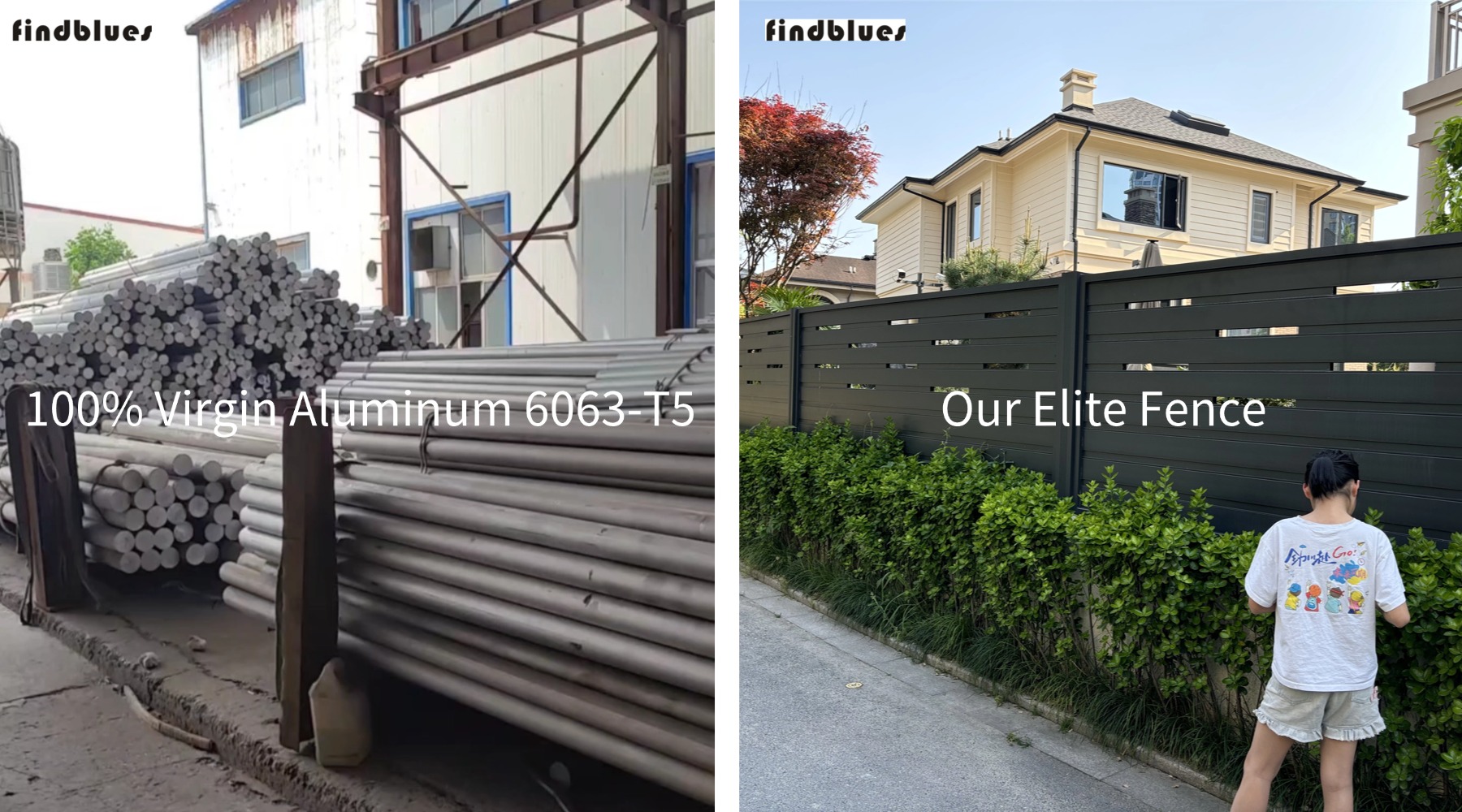
6063-T5 Virgin Aluminum — Why the Alloy Matters
6063-T5 aluminum alloy offers the best balance of extrudability (for clean, precise profiles), surface finish quality (for a smooth, modern look), and corrosion resistance (for constant soil and water contact).
What matters even more: we use 100% virgin aluminum. No recycled content. Recycled aluminum introduces batch-to-batch composition variation — one shipment may weld differently from the next, one batch may anodize to a slightly different shade. When you are specifying planters for a hotel or villa where every line and every color must be consistent, that variation is unacceptable.
We believe that good materials plus good craftsmanship equals good quality. Virgin aluminum is where it starts.
Seam Welding — Waterproof Without Leaks
A planter that leaks muddy water onto pale limestone paving is a landscape architect's nightmare. The weld seams — where the aluminum panels join — are the critical points.
Quality aluminum planters use full-penetration TIG welding at every seam. A properly welded seam is as strong as the parent metal and fully watertight. An improperly welded seam (spot-welded or skip-welded) will leak over time as thermal expansion and contraction work the gaps open.
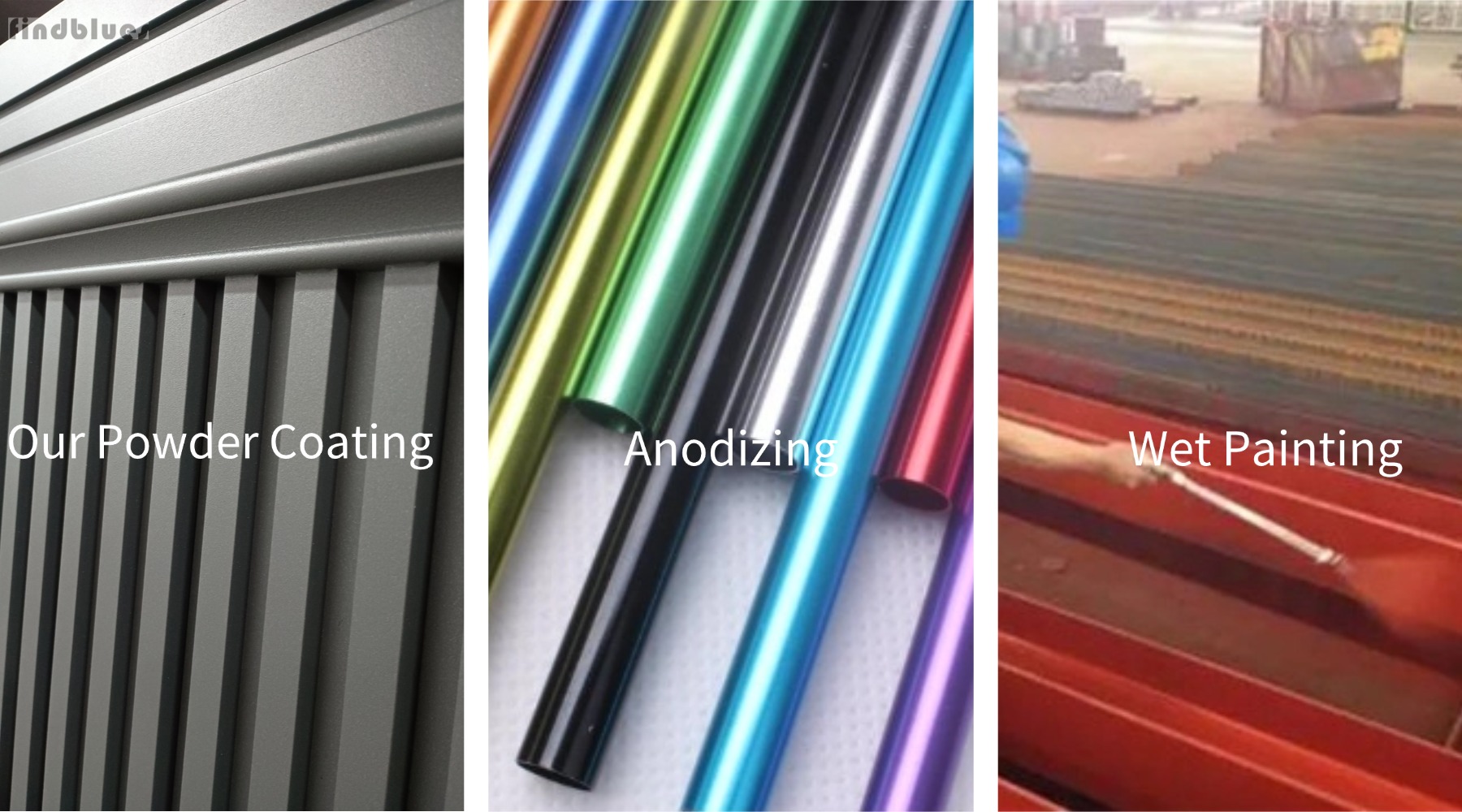
TIGER Drylac® + PVDF Coating — Color Stability Under Sun and Soil
A planter's coating faces a uniquely aggressive environment: direct sun (UV), constant soil moisture against the inner walls, fertilizer and mineral salts in the growing medium, and temperature swings from day to night.
We use TIGER Drylac® powder coating from Austria combined with PVDF (polyvinylidene fluoride) fluoropolymer technology as our standard — not an upgrade, not an option. Every product for export markets ships with this coating system.
Whether your property is in a dry inland suburb or a coastal area with salt spray, the coating system is the same. We don't believe in offering a lesser coating on a premium aluminum product.
Drainage Design — Hidden, Not Visible
A planter needs drainage — standing water rots roots. But a visible drainage hole on the front face of a planter ruins the clean aesthetic.
Quality aluminum planters use concealed drainage: openings on the underside or along the rear face, positioned where they are invisible from the main viewing angle. Some designs include a raised internal floor with a drainage cavity below, so water exits through slots near the base without any visible opening.
Optional Internal Water Reservoir
For commercial projects — hotels, resorts, public spaces — where daily watering is impractical, aluminum planters can include a built-in water reservoir in the base. The reservoir holds excess water and releases it slowly back into the soil via capillary action, extending the interval between watering and reducing maintenance labor. This is an optional feature specified at the design stage.
Design Tips for Landscape Architects
Monochromatic Massing
A row of identical aluminum planters in a single color — matte charcoal, warm bronze, or architectural white — creates a unified, intentional visual line. This works especially well along hotel pool decks, villa terraces, and commercial building perimeters where the architecture demands order and repetition.
Mixed Heights for Visual Rhythm
Alternating tall and low planters along a boundary creates a rhythmic cadence that a single-height row does not. Tall (100 cm) planters with sculptural plants anchor the composition; low (40 cm) planters with ground cover connect them. The variation draws the eye along the full length rather than letting it skip past.
Planter as Privacy Screen Alternative
A row of tall aluminum planters filled with dense evergreens provides the same privacy function as a fence or wall — but reads as landscape, not barrier. For villa gardens where the boundary must feel open and organic rather than fortified, planters achieve separation without confrontation.
Integrating Planters with Gates and Fences — One Design Language
When the gate, fence, and planters all come from the same manufacturer in matching finishes, the entire property boundary reads as one integrated design — not three separate purchases from three suppliers. This is the practical value of an aluminum manufacturer that produces multiple product categories: consistency across every element of the outdoor space.
Real Project Context — From a Gate to a Complete Landscape
Consider this: a client in Germany initially reached out for one custom aluminum gate. After seeing the material quality and finish, the project expanded to eight product categories — including aluminum planter boxes for the villa's garden terraces.
Why? Because once you commit to a material and a finish for the entrance, it makes practical and aesthetic sense to carry that same quality through every element the visitor encounters.
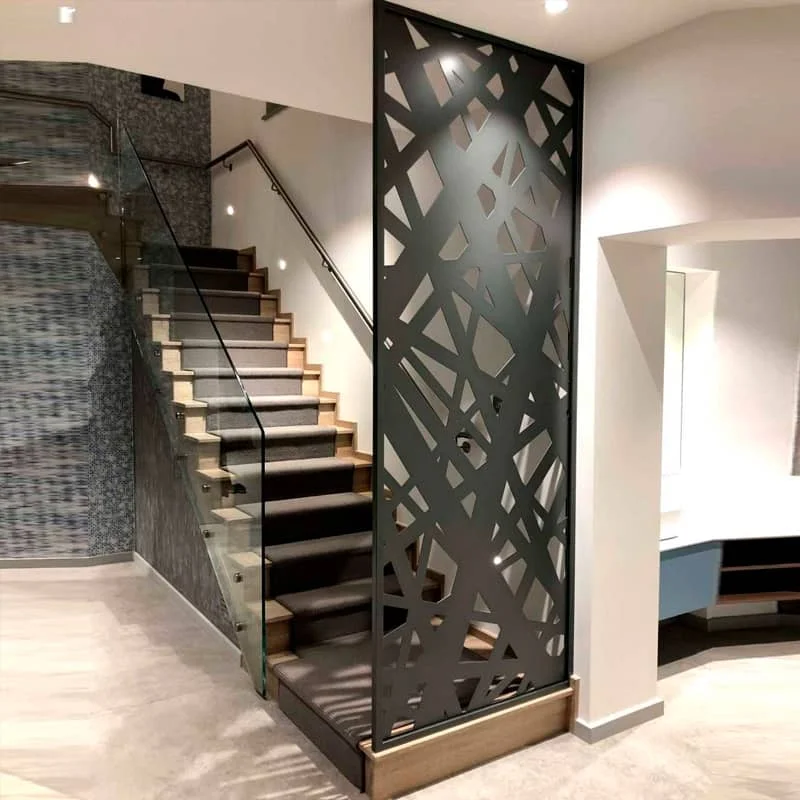
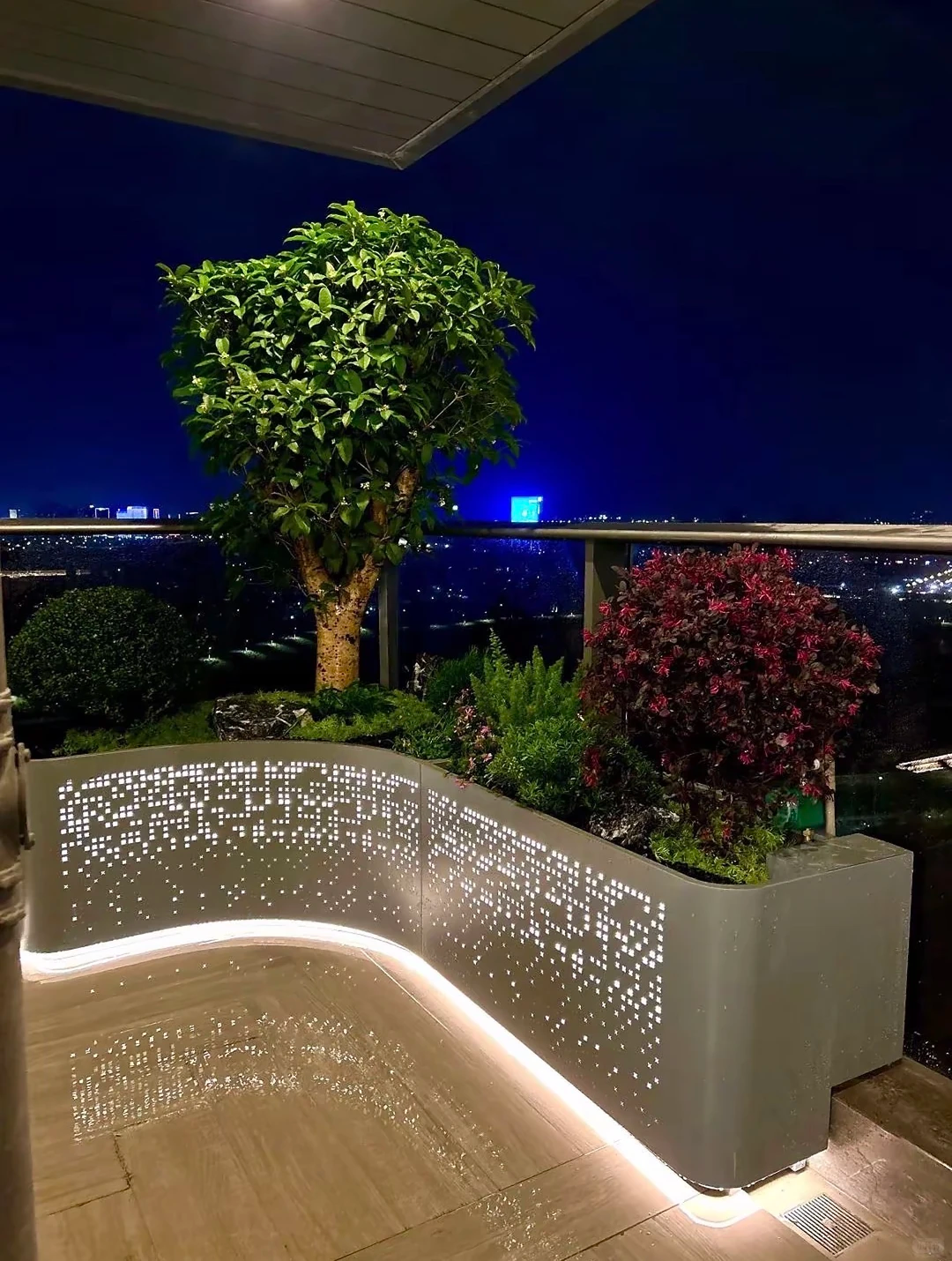
Another client — an experienced design director overseeing a private villa project — specified aluminum gates and fences with laser-cut CNC patterns, then extended the same cutting technology to custom screen panels and the garden's planter boxes. The front gate's decorative motif reappears as a subtle pattern on the planter walls — a detail that no catalog mix-and-match could achieve.
These are not claims about overseas installations — they are examples of how projects evolve when clients discover that one manufacturer can deliver consistent quality across multiple product types.
FAQ — Planter Box Questions
Q:Will aluminum planters get too hot for plants in summer?
A:Common concern, but the physics works differently than people assume. The coating reflects a significant portion of solar radiation. The soil mass inside the planter acts as a thermal buffer — it heats slowly and cools slowly. What matters more than the planter material is soil volume: a larger planter with more soil mass stays thermally more stable. The aluminum shell itself does not transfer significant heat into the root zone because the soil-to-wall contact is minimal relative to the total soil volume. In practice, plants in aluminum planters perform equally to plants in concrete or wood planters under the same sun exposure.
Q:Do aluminum planters need drainage holes?
A:Yes. All outdoor planters need drainage — standing water suffocates roots. Quality aluminum planters include concealed drainage openings (on the underside or rear face) that allow water to exit without being visible from the main viewing angle. Some designs include a raised internal floor so water drains into a cavity below the soil and exits through low-profile slots near the base.
Q:Can I move aluminum planters after they are filled with soil and plants?
A:Yes — that is one of aluminum's key advantages over concrete. A filled aluminum planter of standard dimensions (e.g., 100 cm × 50 cm × 50 cm) weighs roughly 120-150 kg including soil — manageable by two to three people with proper lifting technique and a dolly. A concrete planter of the same volume weighs 350-500 kg and is effectively permanent. If you anticipate reconfiguring a landscape over time, aluminum gives you that flexibility.
Q:What is the expected lifespan of a powder-coated aluminum planter?
A:Aluminum itself does not degrade from weather exposure — it does not rust, rot, or crack. The coating is the limiting variable. With a quality powder coating system correctly applied, the finish maintains color integrity and surface quality for decades of outdoor exposure. The exact duration depends on climate conditions — coastal salt spray, extreme UV, and pollution all accelerate coating aging — but a properly specified and well-maintained aluminum planter should outlast the building it serves.
Q:Can planters be custom-sized to fit a specific space?
A:Yes. Unlike off-the-shelf planters from garden centers, a manufacturer can produce aluminum planters to any dimension within the extrusion and fabrication capabilities. Typical custom parameters include length, width, height, color, drainage configuration, and integrated features like bench seats or screen panels. Provide the dimensions and design intent — the factory handles the rest.
Q:How do aluminum planters compare on cost — upfront and long-term?
A:Upfront, aluminum costs more than plastic or basic wood but less than premium hardwoods (teak, ipe) or architectural-grade concrete. Long-term, the comparison shifts decisively: aluminum requires zero replacement, zero refinishing, zero staining cleanup, and zero repair for rust or cracks. Concrete eventually cracks and stains. Wood requires annual maintenance and eventual replacement. Aluminum's cost over a 10- to 20-year horizon is often the lowest among all premium options — the upfront premium buys a product that does not create ongoing costs.
Ready to Elevate Your Landscape Design?
Tell us about your project — dimensions, quantities, colors, and any special requirements. We will prepare a detailed quote with lead times and shipping options.
Or explore our Planter Box Collection →
20-Year Factory · 100% Virgin Aluminum · TIGER Drylac® + PVDF Coating