Powder Coating vs. Anodizing vs. Painting: What's the Best Finish for Aluminum Outdoor Products?
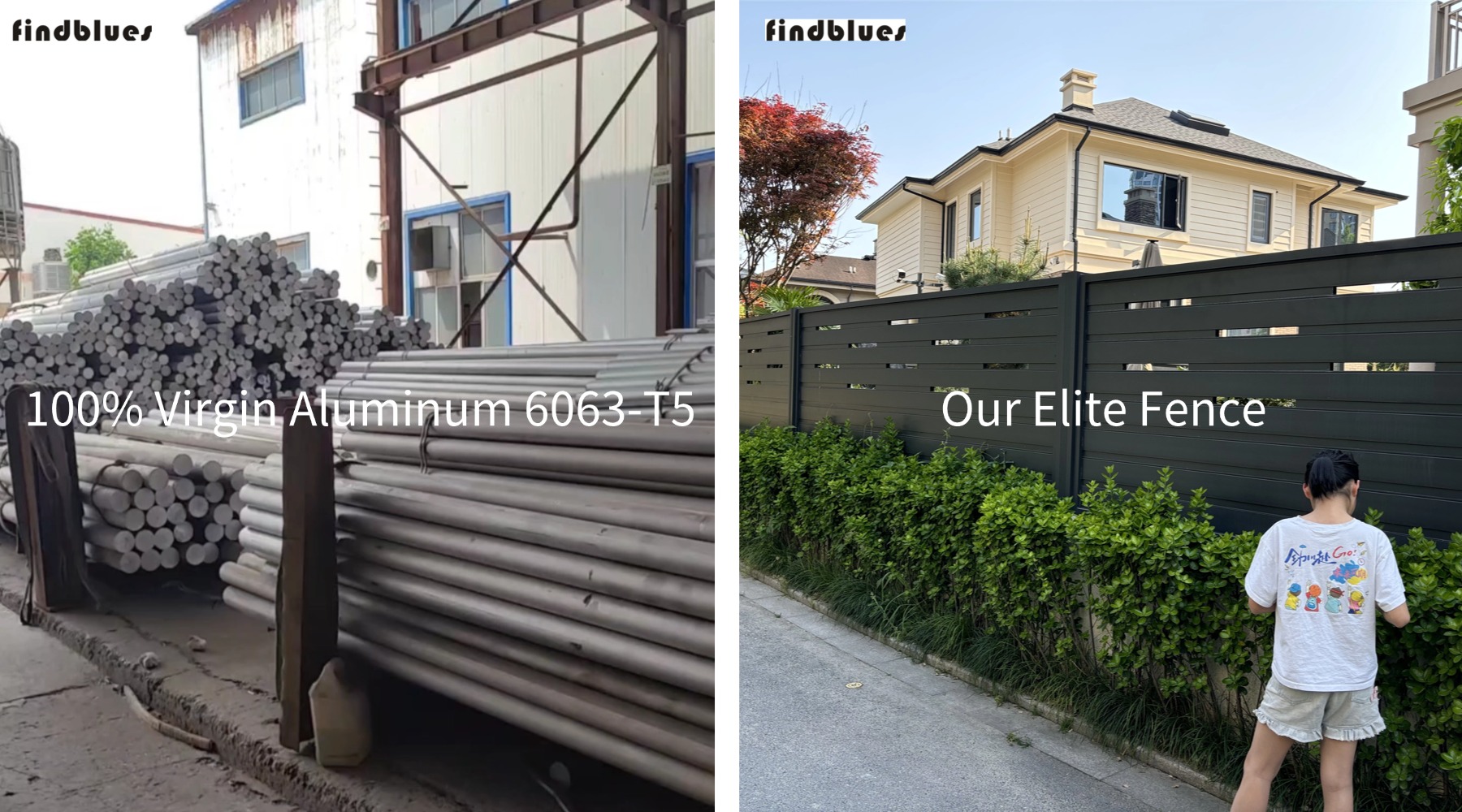
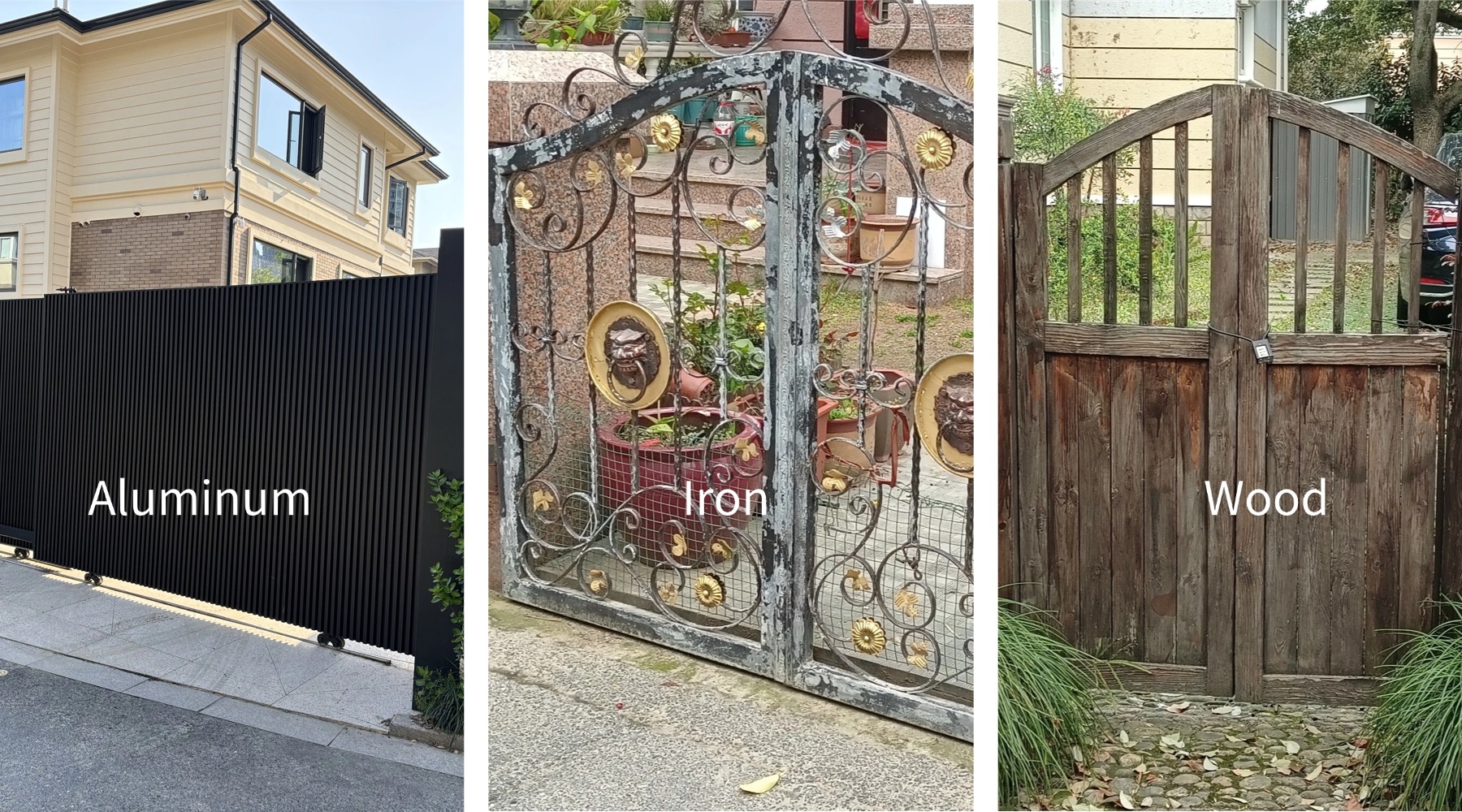
Aluminum doesn't rust — that's one of its biggest advantages. But the surface finish is what determines how your gate, fence, pergola, or carport actually looks after years outdoors. The same 6063-T5 aluminum profile, finished three different ways, can deliver three completely different outcomes.
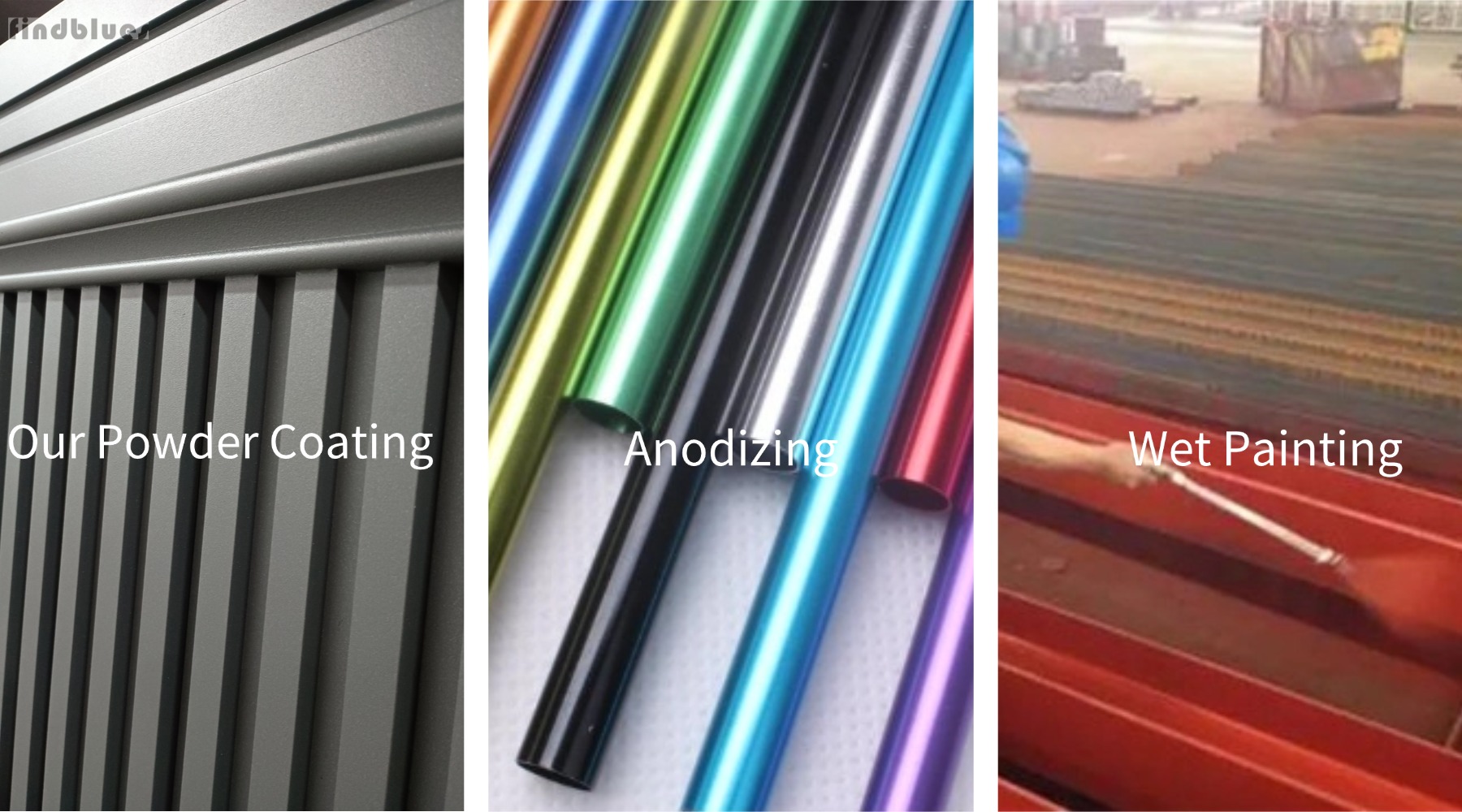
There are three finishing methods you'll encounter when comparing aluminum outdoor products: powder coating (the industry standard), anodizing (the premium metal-look option), and wet painting (the budget choice that most manufacturers have moved away from for outdoor use).
This article explains, in plain English and without laboratory jargon, how each process works, where it performs well, where it doesn't, and which one makes sense for your project. We also explain our own coating approach — because being upfront about what you're getting is better than hiding behind vague "premium finish" claims.
The Short Answer: Which Finish Is Right for Your Project?
If you want the most practical, durable, and cost-effective finish for outdoor aluminum products — powder coating is the answer for the vast majority of projects. It handles UV, rain, humidity, and daily wear better than the alternatives, and it comes in any color you want.
Anodizing makes sense if you specifically want the look and feel of bare metal, and your installation is in a mild climate without constant saltwater exposure. It's a beautiful finish, but it's less forgiving than powder coating.
Wet painting is not recommended for outdoor aluminum products. It can look acceptable when new, but it ages poorly outdoors and requires significantly more maintenance.
| Dimension | Powder Coating | Anodizing | Wet Painting |
|---|---|---|---|
| UV resistance | Excellent — formulated with UV stabilizers | Good — natural oxide layer, but dark anodizing can show weathering | Poor — paint film breaks down under UV |
| Color selection | Unlimited — any RAL, custom colors, textures | Limited — natural metal tones, bronze, black | Wide — but durability is poor |
| Surface coverage | Complete — covers all surfaces including interior cavities | Partial — complex hollow shapes may have uneven coverage | Complete — but adhesion is weak |
| Maintenance | Minimal — occasional cleaning | Minimal — but scratches cannot be repaired | High — requires repainting |
| Cost | Moderate | Higher | Low upfront, high over lifetime |
| Best for | All outdoor aluminum products | Indoor/architectural where metal look is desired | Not recommended for outdoors |
What Is Powder Coating?
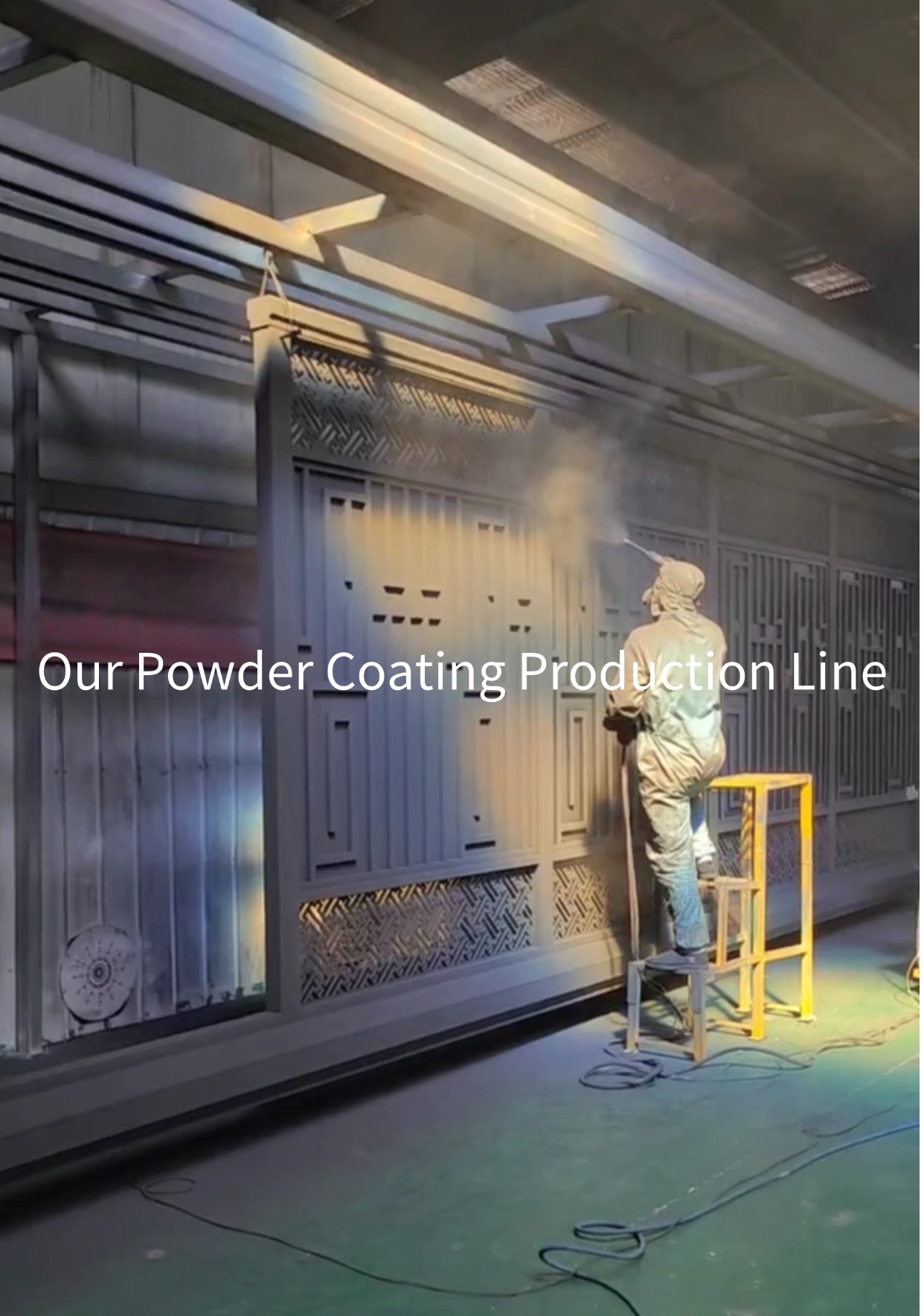
Powder coating is a dry finishing process. Instead of painting with liquid paint, a dry powder — made of resin, pigment, and additives — is electrostatically sprayed onto the aluminum surface. The charged powder particles adhere to the metal, and then the entire piece goes into a curing oven where the powder melts and flows into a smooth, continuous film.
Why It's the Industry Standard for Outdoor Aluminum
- Complete coverage: The electrostatic process pulls powder particles into every corner — hollow sections, welded joints, decorative cutouts.
- UV stability: Premium powder coating formulations include UV stabilizers. The coating doesn't break down under sunlight the way liquid paint does.
- Color consistency: Once the formulation is set, every batch matches. For projects with multiple products (a gate, fence, and pergola all in the same color), this consistency matters.
- Environmental: Powder coating emits zero or near-zero volatile organic compounds (VOCs). It's a cleaner process than wet painting.
Our Coating Standards: One System, Every Product, No Exceptions
At FindBlues, we do not compromise on surface protection. We do not use domestic powder coating or offer a multi-tiered upgrade structure. Every product we manufacture for export is finished with Austria-imported TIGER Drylac® powder coating combined with PVDF (polyvinylidene fluoride) fluoropolymer technology as our single standard.
Why TIGER Drylac®? Because the difference between generic powder and a globally recognized premium brand is visible. It ensures batch-to-batch color consistency, formulation stability, and proven performance in architectural applications worldwide. When a client orders a gate, fence, and pergola in the same color, they expect all three to match — TIGER Drylac® delivers that reliability.
Why PVDF? The fluorine-carbon bond in PVDF is one of the strongest bonds in polymer chemistry. This molecular stability translates directly to superior UV resistance, color retention, and chemical resistance. By making PVDF technology our standard, we ensure every product — whether it's installed in a dry inland suburb or a seaside villa — gets the same level of protection.
What Is Anodizing?
Anodizing is an electrochemical process. The aluminum part is immersed in an electrolyte solution and an electric current is passed through it. This causes a controlled oxide layer (Al₂O₃) to grow on the surface. This oxide layer is integral to the metal — it's not something "applied on top" like paint or powder.
The Appeal of Anodizing
The appeal is aesthetic: anodized aluminum looks like metal, because it is metal. There's no "coating" layer to scratch through to a different-colored substrate. The color is the metal itself (or rather, the oxide layer on the metal).
The Limitations
- Color limitation: Anodizing naturally produces colors in the bronze, black, and natural metal spectrum. Vibrant colors are difficult to achieve and not commonly available for architectural aluminum.
- Not repairable: If an anodized surface gets scratched deeply, the exposed aluminum will begin to anodize naturally (forming a new oxide layer). But it won't match the surrounding finish. Powder coating, by contrast, can be locally touched up.
- Coverage in hollows: The anodizing process requires electrical contact and electrolyte circulation. Complex hollow shapes (like thin-wall decorative profiles) may anodize unevenly in hard-to-reach interior surfaces.
Anodizing is an excellent choice for the right application. But for most outdoor aluminum products — gates that get touched daily, fences exposed to garden sprinklers, pergolas in coastal air — powder coating is the more practical choice.
Wet Painting: Why It's Not Recommended for Outdoor Aluminum
Wet painting (liquid paint applied with a spray gun or brush) was the standard before powder coating became widely available. It's still used in some budget manufacturing.
The problem isn't that "paint is bad" — it's that paint adheres to aluminum poorly compared to powder coating. Aluminum expands and contracts with temperature changes. Paint film doesn't flex the same way, so it eventually cracks, peels, or bubbles.
For indoor aluminum furniture that lives in climate-controlled spaces, wet painting can be acceptable. For outdoor products exposed to rain, UV, and temperature swings — powder coating is the better choice.
Why PVDF Is Our Standard — Not Just for Coastal Properties
In the coating industry, PVDF fluoropolymer coating is often positioned as a "coastal upgrade" — something you add only when the property is within 500 meters of the ocean. Many manufacturers offer standard powder coating for inland projects and reserve PVDF for coastal clients who specifically request it.
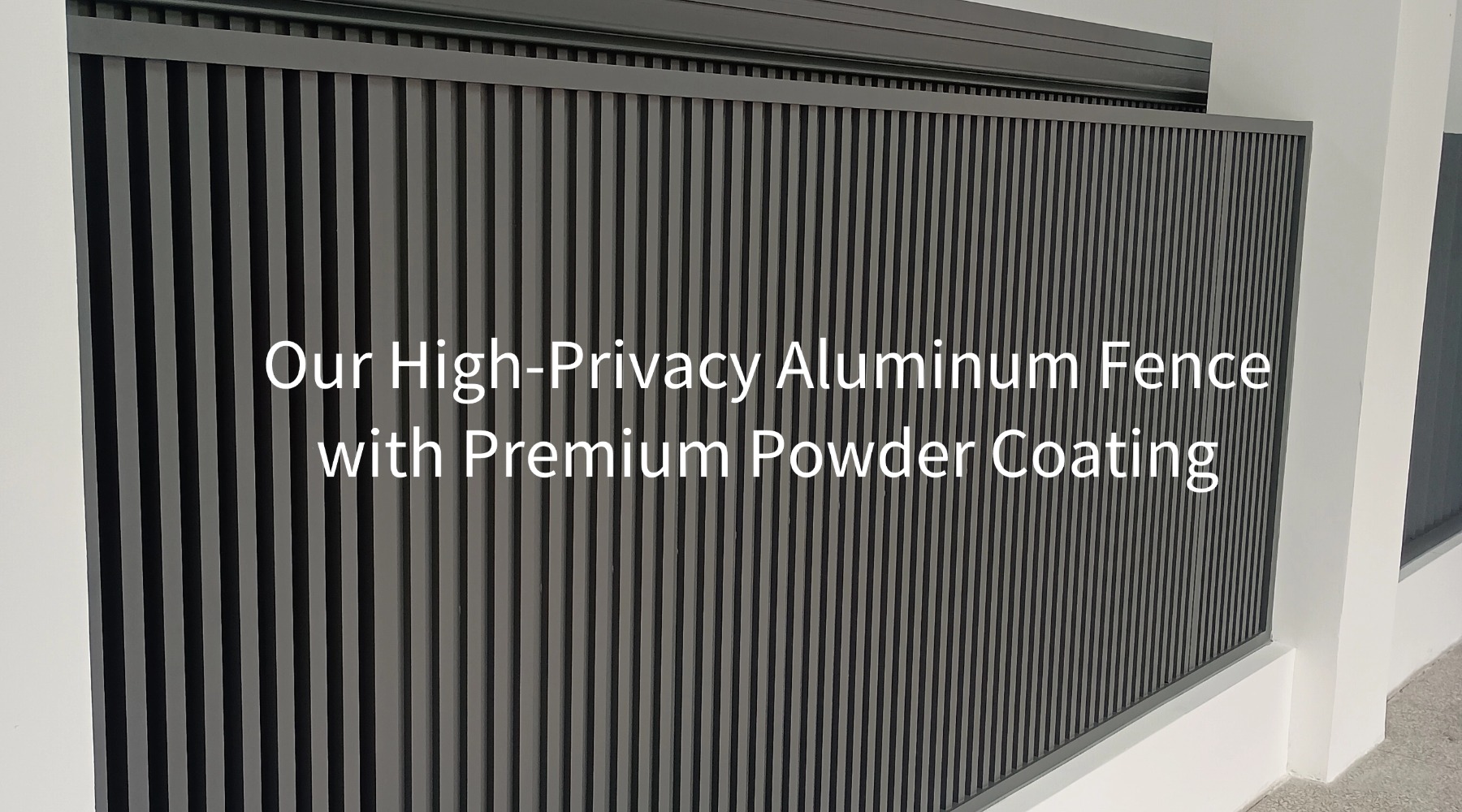
We don't work that way. We use TIGER Drylac® + PVDF coating on every product we manufacture for export. Here's why:
1. UV doesn't only hit coastal properties. Sunlight is sunlight. A gate in a landlocked city still faces daily UV exposure. The molecular stability of the fluorine-carbon bond in PVDF resists UV degradation regardless of geography.
2. Consistency across product lines. When a client orders a complete outdoor package — gate, fence, pergola, carport — they expect all products to age the same way. Standardizing on PVDF ensures uniform performance across the entire project.
3. Export products face long supply chains. Our products ship to Europe — through varying climates, storage conditions, and installation environments. We can't control where each product ends up or what microclimate it's installed in. PVDF as a standard gives us confidence that the finish will perform wherever the product lands.
4. It's the right thing to do. We don't believe in offering a lesser coating on a premium aluminum product. We don't use domestic powder coating or offer PVDF as a paid upgrade. Our standard is your assurance.
FindBlues Coating Strategy: One Standard, No Shortcuts
We keep our coating strategy simple: every product gets our best.
Our standard finish — on every export product, with no exceptions:
- TIGER Drylac® + PVDF coating as our standard on all export products
- TIGER Drylac® imported powder coating (manufactured in Austria)
- PVDF fluoropolymer technology for superior UV and chemical resistance
- Full RAL color range available, including custom colors
- Suitable for all climates — inland, coastal, high-altitude, humid
We don't offer a "budget tier" with domestic powder coating. We don't charge extra for PVDF. We don't position premium coating as an "upgrade." The reason is straightforward: we manufacture with 100% virgin aluminum, we've been doing this for 20 years, and we believe good materials and good processes produce good products. Using anything less than our best coating on a premium aluminum product would undermine the rest of our work.
How to Visually Assess Coating Quality (Before You Order)
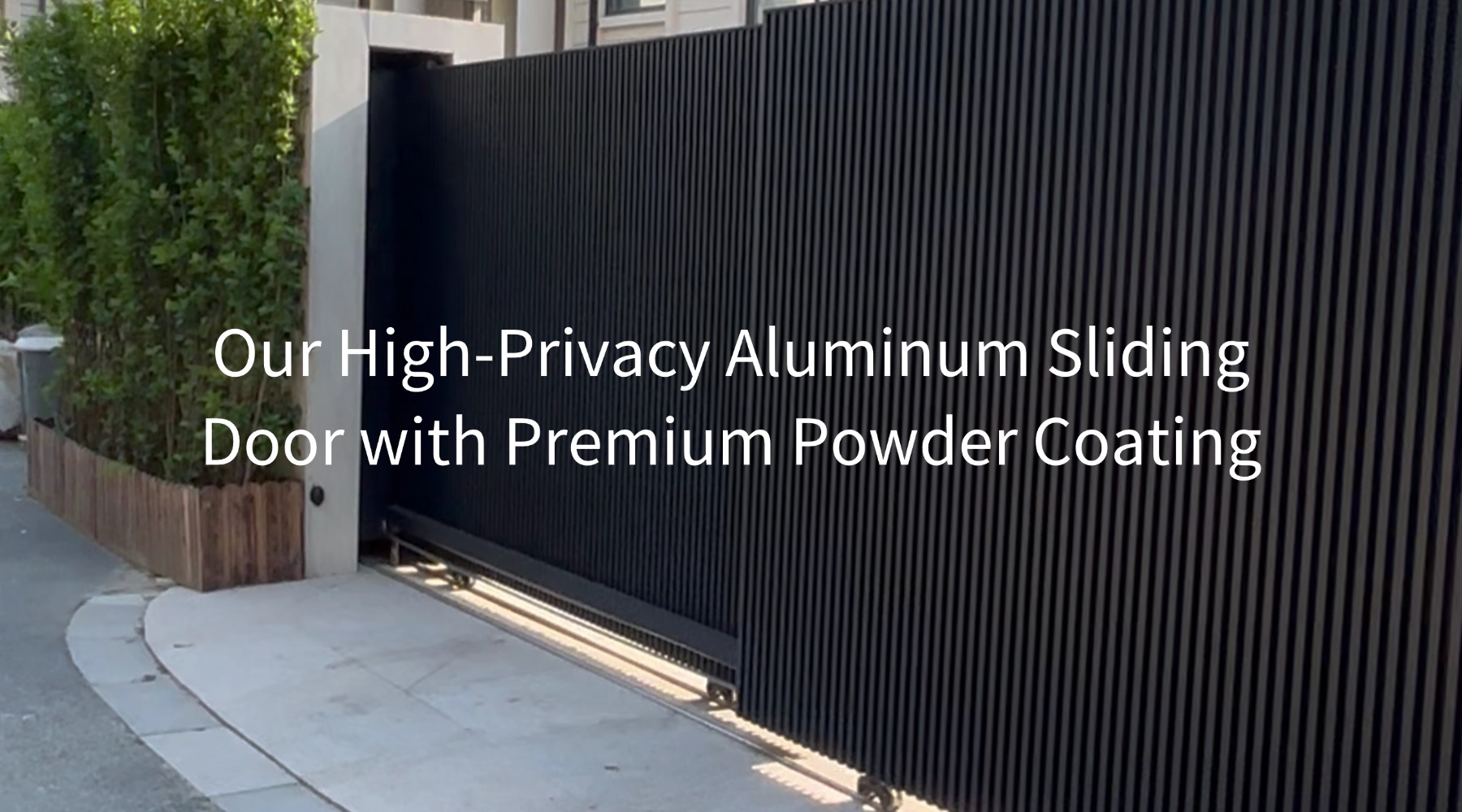
You don't need laboratory test reports to spot quality differences in powder coating. Here's what to look for:
1. Color consistency across parts: Ask to see multiple pieces that are supposed to be the same color, placed side by side in natural daylight. Color shift between pieces is a sign of inconsistent powder batch or inconsistent oven temperature.
2. Surface smoothness: Run your hand across the surface. Quality powder coating feels smooth and uniform. Excessive "orange peel" texture (a slightly bumpy surface) can be a sign of improper powder application or incorrect oven temperature.
3. Edge coverage: Look at cut edges and welded joints. The coating should cover these areas completely, with no bare aluminum showing. Edge coverage is one of the most common places where budget coating fails.
4. Weld finish: If the product has visible welds, the coating should transition smoothly over the welded area. Excessive buildup or roughness at welds suggests the welding or surface preparation wasn't done properly before coating.
FAQ: Powder Coating Questions
Q: Does powder coating fade in sunlight?
A: All outdoor finishes are affected by UV exposure over time. Quality powder coating includes UV stabilizers that significantly slow down visible fading. PVDF fluoropolymer technology further enhances UV resistance due to the exceptional stability of the fluorine-carbon bond. The rate at which color changes depends on the specific pigment, the coating formulation, and the intensity of UV exposure in your location. Darker colors show change sooner than lighter colors.
Q: Can powder coating be repaired if scratched?
A: Minor surface scratches can often be touched up. Unlike anodizing (where a scratch exposes bare aluminum that immediately begins to re-anodize), powder coating can be locally repaired with matching touch-up paint. Deep scratches that expose the substrate may require professional repair or re-coating of the affected part.
Q: Why is TIGER Drylac® + PVDF coating the only standard for FindBlues export products?
A: We believe that premium aluminum outdoor products deserve a premium finish without compromise. By using Austria-imported TIGER Drylac® powder coating combined with PVDF fluoropolymer technology as our only standard, we ensure that every gate, fence, and pergola we ship is prepared for maximum outdoor exposure, UV protection, and color consistency, regardless of climate — with no budget options, no shortcuts, and no exceptions.
Q: Can I specify a custom color that's not in the RAL book?
A: Yes, custom colors are possible with powder coating. The process requires purchasing a custom powder formulation, which has a higher minimum order quantity and longer lead time. If your project requires a specific non-standard color, discuss it with us during the quotation phase.
Q: How do I maintain powder coated aluminum products?
A: Maintenance is minimal. Occasional washing with mild soap and water to remove dirt, salt spray residue, or pollen is sufficient. Avoid abrasive cleaners or power washing at close range, which can damage the coating surface. For coastal properties, rinsing salt spray off periodically helps maximize coating life.
Ready to Start Your Project?
Whether you're choosing a finish for a single gate or coordinating coating colors across eight product categories, we're happy to talk through the options.
Or explore our Aluminum Product Collection →
20-Year Factory · 100% Virgin Aluminum · TIGER Drylac® + PVDF Coating · Ships to UK, EU & Beyond